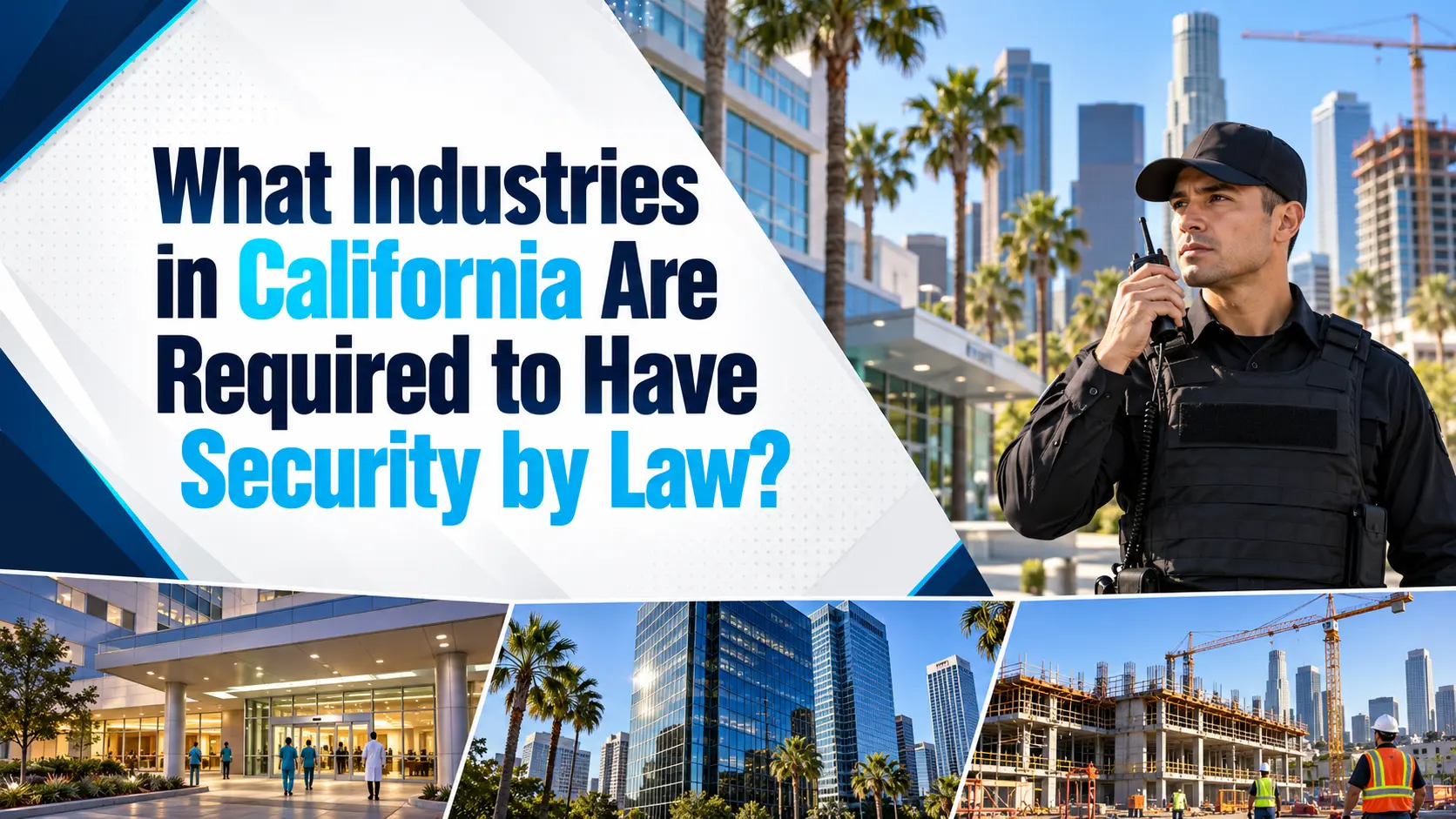
Not every business in California hires security guards by choice. For a significant number of industries, it is a legal requirement backed by state law, federal regulation, or licensing conditions enforced by California’s regulatory agencies.
How California Security Requirements Work
Security mandates in California come from multiple sources including state statutes, the California Code of Regulations, federal law, and licensing conditions set by agencies like the Department of Alcoholic Beverage Control and the Department of Cannabis Control.
Failure to meet these requirements typically puts a business license at risk, not just a fine. First Choice Security Guard and Patrol Services works with businesses across Los Angeles, Orange, and Ventura Counties to meet their specific legal security obligations with licensed, BSIS-certified guards.
Industries Legally Required to Have Security in California
The industries below are subject to specific, enforceable security requirements under California or federal law. Non-compliance in each case carries direct regulatory consequences.
Hospitals and Healthcare Facilities
California Senate Bill 1299 requires all hospitals to adopt workplace violence prevention plans that include security procedures enforced by Cal/OSHA under Title 8 of the California Code of Regulations. Licensed security personnel are a standard component of any compliant California hospital security program.
Psychiatric and Mental Health Facilities
California Code of Regulations Title 22 imposes specific security requirements on psychiatric health facilities, including trained security or behavioural intervention staff.
These facilities hold patients under California Welfare and Institutions Code Section 5150, which creates strict legal obligations around safe containment.
Non-compliant facilities face licensing action from the California Department of Health Care Services. Learn more about the grave importance of hospital security in regulated environments.
Cannabis Dispensaries and Retailers
The Department of Cannabis Control requires all licensed cannabis retailers to maintain live security guards during business hours and controlled access to all areas where cannabis is stored or sold under California Code of Regulations Title 16.
Dispensaries that fail to maintain required security personnel risk suspension or revocation of their operating licence.
Banks and Financial Institutions
The federal Bank Protection Act of 1968 requires all federally insured banks to establish security programs that include physical security measures and, based on risk assessment, security personnel.
California state-chartered banks fall under additional oversight by the Department of Financial Protection and Innovation.
Bars, Nightclubs, and Alcohol-Licensed Venues
The California Department of Alcoholic Beverage Control can impose security conditions on alcohol licences under Business and Professions Code Section 24200, requiring a specific number of licensed guards, documented security plans, and CCTV coverage.
ABC licensees who fail to comply with imposed conditions face suspension or revocation of their liquor licence.
Casinos and Tribal Gaming Establishments
Tribal gaming operations in California operate under compacts governed by the California Gambling Control Commission and the National Indian Gaming Commission, both of which require uniformed security personnel, surveillance systems, and written security policies.
Tribal casinos are subject to regular audits, and security deficiencies must be corrected within defined timeframes.
Schools and Educational Institutions
California Education Code Section 32280 requires all schools to maintain a comprehensive safety plan with a security component, and Section 38000 authorises school districts to establish school police or security departments.
Districts in higher-risk areas frequently operate full school police departments supplemented by unarmed campus security personnel.
Construction Sites
Cal/OSHA requires employers to maintain safe working conditions on construction sites, and larger public works or federally funded projects often carry specific security requirements as a condition of the project contract. High-value construction sites in urban areas are increasingly subject to mandatory security provisions within their project agreements.
Industries Where Security Requirements Depend on Jurisdiction or Licence Conditions
The industries below are not universally required to have security across all of California, but face enforceable requirements in specific circumstances or jurisdictions.
Large Events and Public Venues
Many California cities require licensed security as a condition of event permits, particularly above defined attendance thresholds. Los Angeles requires security plans and licensed guards for events at permitted venues beyond certain capacity limits.
Pharmacies and Controlled Substance Retailers
Pharmacies handling Schedule II controlled substances face security requirements around access control and, in some cases, physical security personnel under DEA registration conditions.
High-volume pharmacies in high-theft areas may effectively be required to maintain on-site security personnel to satisfy their DEA and Board of Pharmacy obligations.
Government Buildings and Courthouses
California courthouses are required to maintain security screening and uniformed personnel under the California Rules of Court. Most government buildings in California control access through security personnel or screening requirements enforced through administrative policy.
Residential Complexes
Some California cities require security measures including guard services for multi-unit residential properties with a documented history of criminal incidents. HOA governing documents can also impose security obligations that are enforceable under California Civil Code.
California Security Requirements by Industry
| Industry | Primary Legal Authority | Security Required |
| Hospitals | SB 1299, Cal/OSHA Title 8 | Security personnel, written safety plan |
| Psychiatric facilities | CCR Title 22, WIC 5150 | Trained security or intervention staff |
| Cannabis dispensaries | DCC, CCR Title 16 | Licensed guards, access control |
| Banks | Federal Bank Protection Act, DFPI | Security program, risk-based personnel |
| Bars and nightclubs | ABC, Business and Professions Code 24200 | Licensed guards, CCTV, security plan |
| Tribal casinos | CGCC, NIGC | Uniformed security, surveillance, policies |
| Schools | Education Code 32280, 38000 | Safety plan, security personnel |
| Construction sites | Cal/OSHA, project contracts | Site security per contract |
| Large events | Local permit conditions | Licensed security per venue and attendance |
Consequences of Non-Compliance With California Security Requirements
Non-compliance is not treated as a minor administrative issue. For regulated businesses, the consequences are direct and can be business-ending. If your business operates in a regulated industry and you are unsure whether your current setup meets legal requirements, contact First Choice Security for a site assessment.
Licence suspension or revocation: Cannabis, alcohol, and healthcare licensees face licence action for failing to maintain required security
Cal/OSHA citations and fines: Workplaces without required safety and security measures face enforcement citations
Civil liability: A business that fails to provide legally required security and suffers a foreseeable incident faces significant negligence exposure
Loss of federal contracts: Federal contractors who fail to meet security requirements risk losing contracts or future eligibility
Criminal exposure: In some contexts, particularly healthcare and cannabis, owners who knowingly operate without required security face personal criminal liability
Conclusion
California’s security requirements cover more industries than most business owners expect, and they come from multiple layers of law and regulation. Knowing which requirements apply to your industry and ensuring your security provider holds the correct California licences is the starting point for staying compliant and protected.
Disclaimer:This article provides general legal information about California security requirements and does not constitute legal advice. Regulatory requirements change and specific obligations vary by jurisdiction, licence type, and business circumstances. Consult a qualified California attorney or your relevant regulatory agency for guidance specific to your situation.