
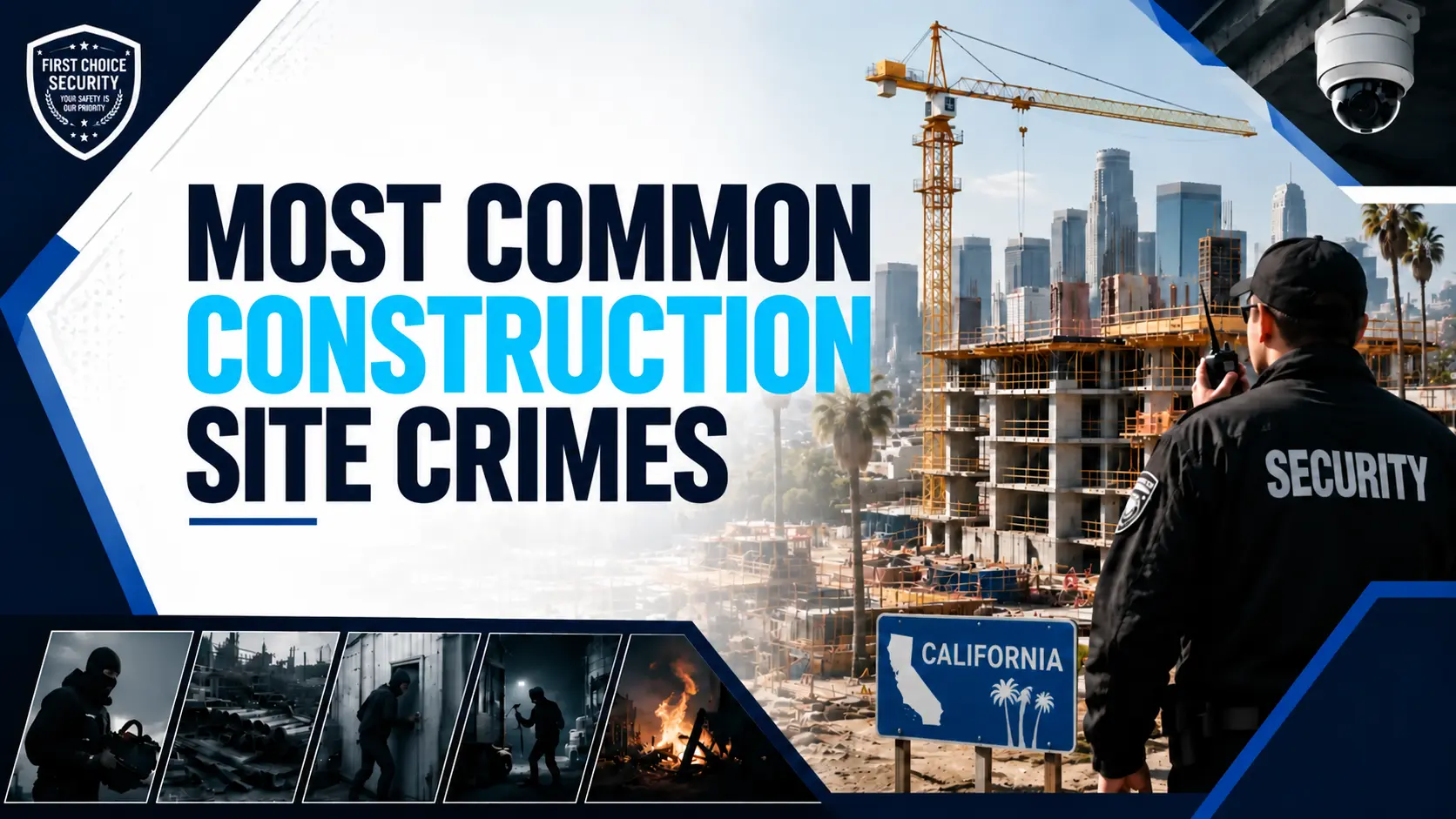
Construction sites lose billions of dollars annually to theft, vandalism, and unauthorized access across the United States. Unlike retail stores or office buildings, these sites operate with open perimeters, rotating workforces, and expensive equipment left unattended overnight.
Understanding what crimes happen most often is the first step toward building a security plan that actually prevents them.
Why Construction Sites Are Easy Targets
Active build sites combine high-value assets with limited physical security, making them attractive targets for both opportunistic criminals and organized theft rings. The table below outlines the core vulnerabilities that make construction site security a necessity rather than an optional expense.
| Vulnerability Factor | Why It Matters |
| No permanent walls or fencing | Easy perimeter access at multiple points |
| Valuable equipment left overnight | High-value targets with no secure storage |
| Rotating workforce | Difficult to verify who belongs on site |
| Remote or isolated locations | Slower law enforcement response times |
| No 24-hour supervision | Long unmonitored windows overnight |
| Multiple contractor access | Inconsistent security awareness across crews |
The Most Common Crimes on Construction Sites
Construction crime is not random. Certain crimes repeat across sites of all sizes, and recognizing the patterns helps project managers take targeted action before losses occur.
Equipment and Tool Theft
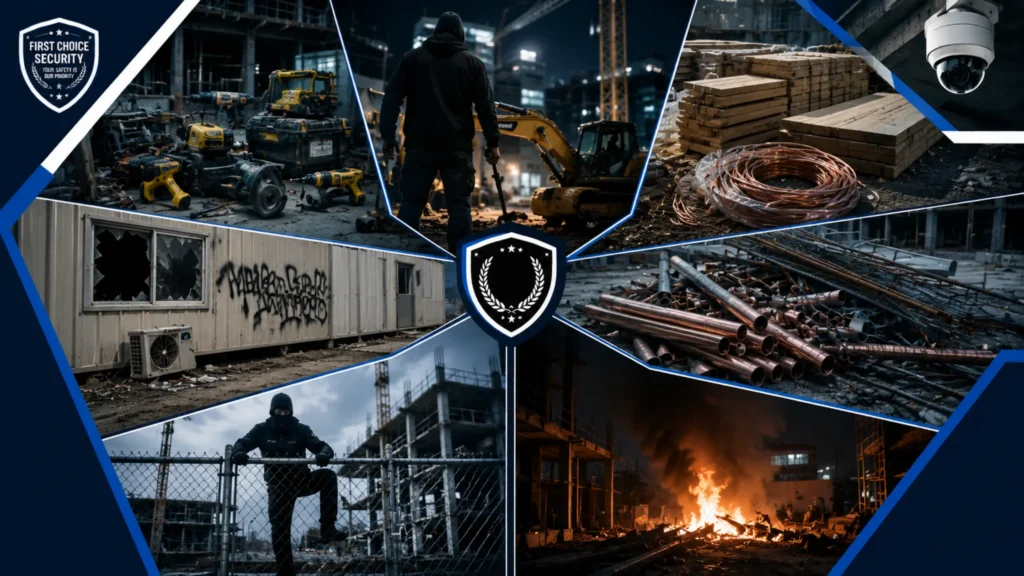
Heavy machinery, generators, and power tools are among the most stolen items from construction sites nationwide, with the National Equipment Register estimating annual losses exceeding $1 billion in the United States alone. Thieves often survey sites during working hours to identify what equipment is present before returning after dark.
Material Theft
Lumber, copper wire, concrete blocks, and roofing materials disappear regularly from sites where bulk materials are stored in the open. This type of theft is harder to detect than missing machinery because materials often move around legitimately during the day, masking unauthorized removal.
Vandalism and Property Damage
Deliberate damage to machinery, site offices, and completed work sections costs the construction industry millions annually in repair and rework expenses. Vandalism often occurs alongside trespassing and can sometimes signal more organized criminal activity targeting a specific site.
Copper and Metal Theft
Copper piping, aluminum framing, and steel reinforcements attract thieves because scrap metal markets offer quick cash with minimal traceability. According to the U.S. Department of Energy, copper theft alone costs American industries an estimated $1 billion per year, with construction sites accounting for a significant share.
Trespassing and Unauthorized Access
People entering sites without authorization range from curious individuals to professional theft crews conducting advance reconnaissance. Unauthorized access also creates serious liability exposure for contractors if someone is injured on an unsecured site, regardless of criminal intent.
Arson
Deliberate fires on construction sites destroy completed work, damage equipment, and trigger costly project delays that affect timelines and client relationships. Arson is more common on sites with ongoing disputes, insurance fraud motivations, or inadequate overnight monitoring where fires go undetected for hours.
What These Crimes Actually Cost Project Owners
The financial impact of construction crime extends well beyond the replacement value of stolen or damaged items. A security gap assessment before a project begins is one of the most effective ways to quantify risk and justify security investment, and understanding the true cost of crime makes that conversation much easier with construction site security professionals.
Direct Financial Losses
Replacing stolen equipment and materials at current market prices often costs two to three times the original purchase price when factoring in emergency procurement, delivery delays, and premium pricing for urgent orders. Many contractors are underinsured for theft, meaning a significant portion of replacement costs comes directly out of project budgets.
Project Delays and Deadline Impact
When critical equipment goes missing or vandalism damages completed sections, project timelines shift in ways that trigger penalty clauses, subcontractor rescheduling fees, and client dissatisfaction. A single theft incident can set a mid-sized project back by one to three weeks when accounting for insurance claims, replacements, and reinspection requirements.
Insurance Premium Increases
Filing repeated theft or vandalism claims signals to insurers that a contractor presents elevated risk, resulting in higher premiums on future projects. Some insurers require documented security measures as a condition of coverage, making professional security not just a protective measure but a policy compliance requirement.
How to Reduce Crime Risk on Your Site
Most construction site crimes are preventable with the right combination of physical deterrents, access controls, and professional security presence. The goal is making your site a harder target than the one down the road.
Practical steps that reduce crime exposure include:
- Hire licensed security guards for overnight and weekend coverage when crews are absent
- Conduct a formal site assessment to identify access points and blind spots before work begins
- Implement a sign-in system for all contractors and visitors entering the site
- Install motion-activated lighting across storage areas and perimeter entry points
- Track serial numbers and markings on all major equipment for faster recovery
- Work with a security provider experienced in construction environments rather than generic patrol services
- Review your insurance policy to confirm coverage aligns with on-site asset values
Conclusion
Construction site crime is predictable, which means it is also largely preventable. Equipment theft, material losses, vandalism, and unauthorized access follow consistent patterns that professional security addresses directly. Project owners who treat security as part of the build budget rather than an afterthought consistently experience fewer incidents, lower insurance costs, and smoother project timelines.